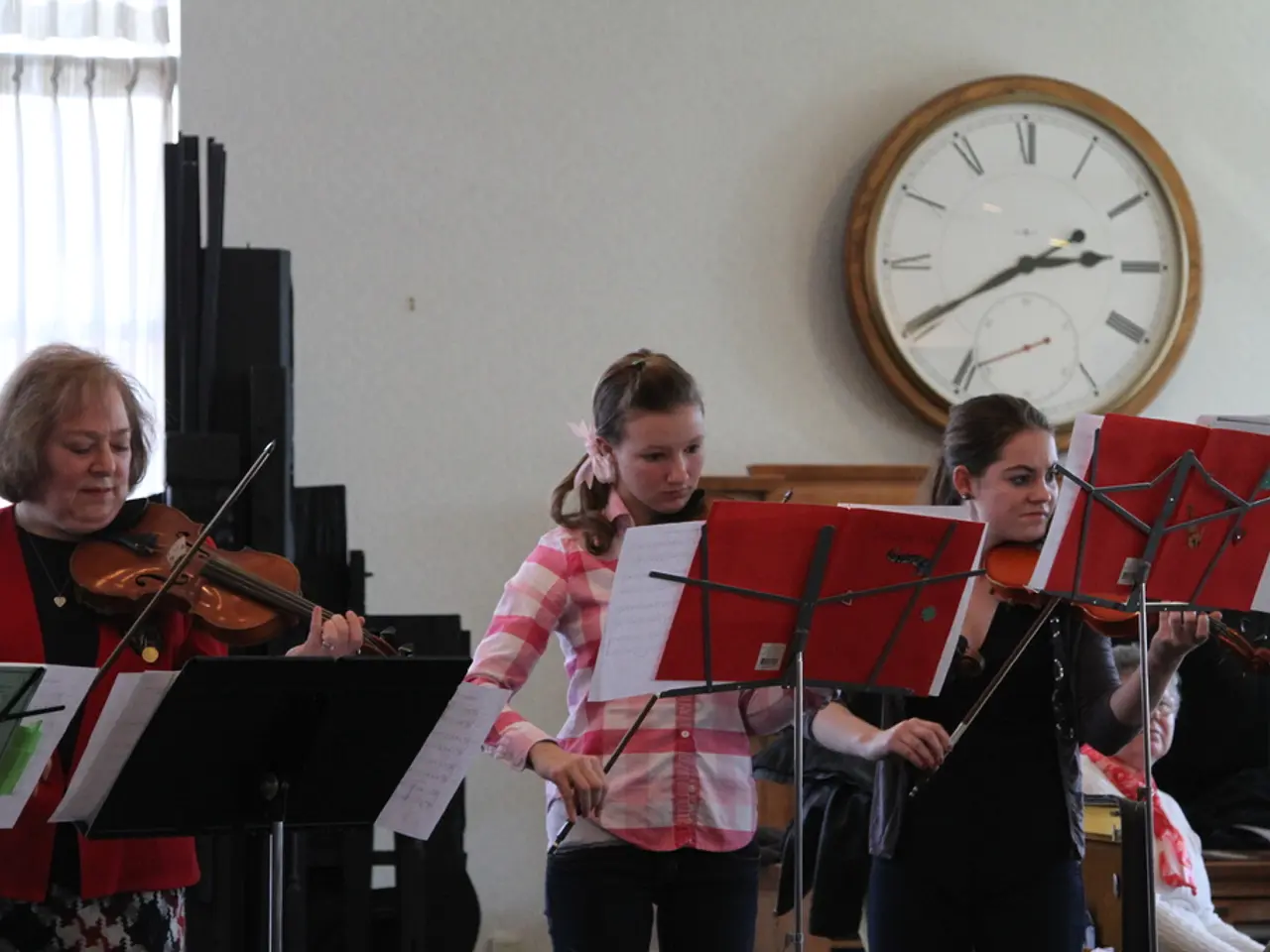
Audience Heart Rhythms and Respiration Rates Align During a Classical Music Performance
In a fascinating new study led by Professor Wolfgang Tschacher at the University of Bern in Switzerland, it has been discovered that audience members of classical music concerts can experience a remarkable level of synchronisation with each other. This synchronisation, Tschacher suggests, is a sign that people are truly engaged in the music, reacting emotionally in the same way.
The study involved 132 concertgoers in Berlin, aged 18 to 85, who were separated into three groups to watch different concerts. Each participant wore a belt with sensors inside while enjoying the music. The concerts included Beethoven's Quintet in C minor, Brahms' Quintet No.2 in G major, and 'Epitaphs' by Brett Dean.
The body sensors found that the audience members became more physically synchronised with each other during the concerts. The concertgoers' breathing rates synced up the most, followed by their heart rate and level of excitement, measured by small increases in sweat on their fingertips. Interestingly, synchronisation occurred more when the participants listened to Brahms and Dean, compared to Beethoven.
The study also found that those with 'agreeable' personalities who enjoyed new experiences were more likely to sync up with others. On the other hand, people who valued social interaction during concerts were less likely to have a synchronized physical response to the music. Tschacher stated that those with more 'agreeable' personalities may be more likely to conform to social expectations, such as concentrating on the music at a concert.
Previous studies have found that musicians and conductors also have synchronized physical reactions to music. The new study's findings suggest that this synchronisation is not limited to performers but extends to the audience as well. Tschacher even proposes that this synchronisation would likely happen across other genres of music as well.
The study also indicates that people at a concert, who do not know each other and do not even speak to each other, seem to have a shared experience based on measurements like their heart rate. This shared experience, Tschacher suggests, could be a powerful tool for fostering a sense of community and connection in a world that often feels divided.
The study's participants were also asked to complete a personality test. 'Openness' is a personality trait associated with welcoming new experiences, liking art, travel, and exotic things. It appears that those who are open to new experiences are more likely to sync up with others during a concert.
In conclusion, the study provides compelling evidence that music has the power to bring people together, creating a shared emotional and physical experience. Whether it's classical music, jazz, or pop, the next time you're at a concert, remember that you're not just listening to the music—you're also moving, breathing, and feeling in rhythm with those around you.
Read also:
- visionary women of WearCheck spearheading technological advancements and catalyzing transformations
- Recognition of Exceptional Patient Care: Top Staff Honored by Medical Center Board
- A continuous command instructing an entity to halts all actions, repeated numerous times.
- Oxidative Stress in Sperm Abnormalities: Impact of Reactive Oxygen Species (ROS) on Sperm Harm