
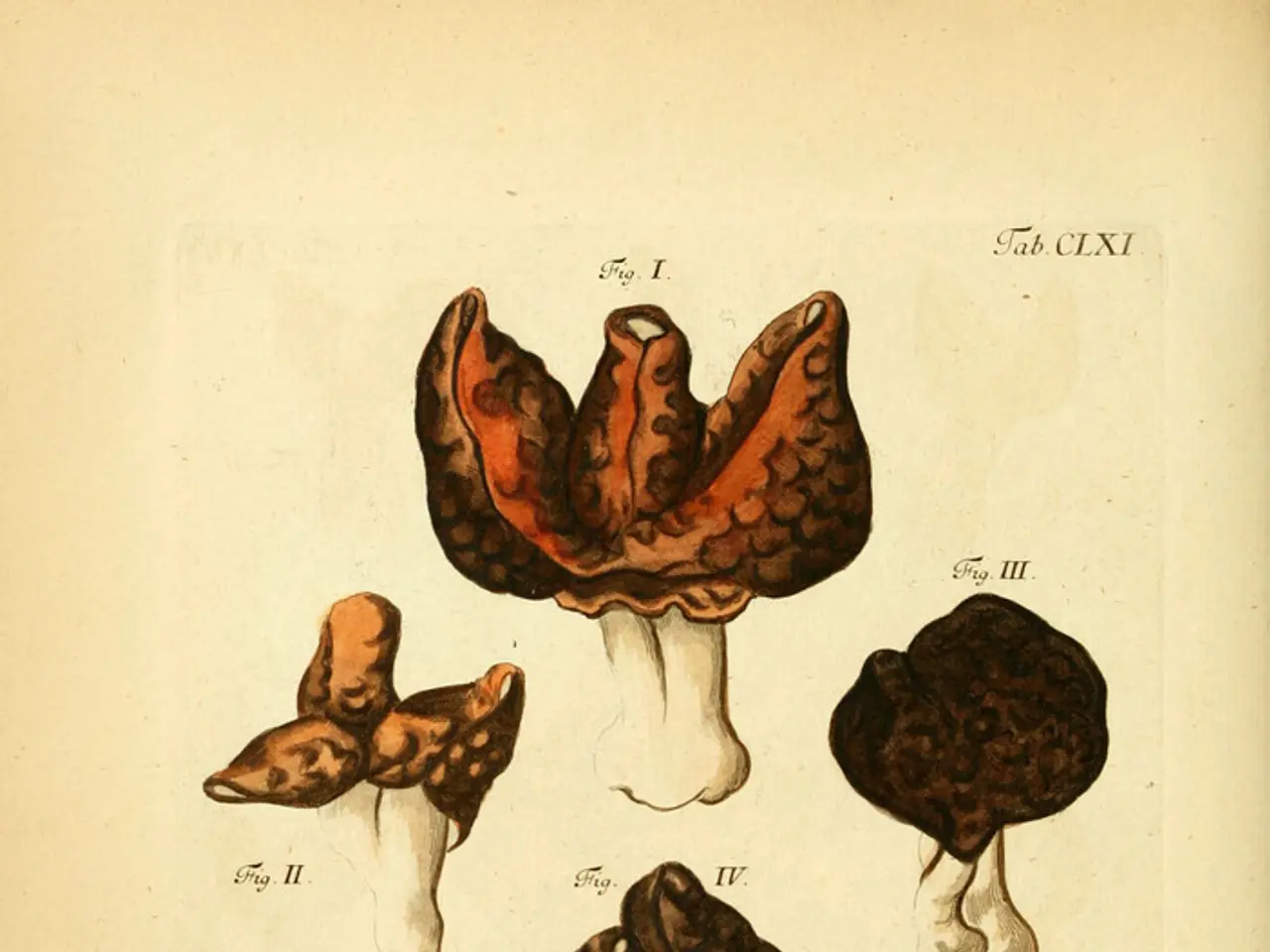
Cultivating Shiitake Mushrooms: Utilizing Logs and Nurseries
In the world of shiitake mushroom cultivation, the choice of log stacking method and the location of the laying yard can significantly impact the growth and health of the fungus. Here's a breakdown of various stacking techniques and their optimal conditions.
Lean-to stacking is a versatile and adaptable method, offering a high degree of uniformity. This technique allows for regulation of rain shadow effects and airflow in the stack by adjusting log angles and alignment. Moreover, lean-to stacking aids in regulating the daytime temperatures of the logs, which is crucial for maintaining the right conditions for shiitake growth.
Crib stacking, on the other hand, provides the best conditions for shiitake mushroom production in humid, calm regions. However, crib stacking during the spawn run is best suited to airy locations in consistently humid climates with ample, regular rains.
Steeper angles in lean-to stacking may speed up the runoff of rain from the log surface, making it suitable for humid, rainy climates. Conversely, lower stack angles are appropriate for relatively dry climates or sites and for log sizes or species that are prone to excessive drying.
The Japanese Hillside Stacking technique, a modified version of the crib stack, is designed for steep locations. This method increases stability, reduces pest pressure, improves aeration, and facilitates easy harvesting. It may be most useful to growers in southeastern Ohio, according to a study by Mudge et al. (2013).
High A-Frame stacking is suitable only for long-term laying on humid and calm sites. Dead piling, used mainly for short-term storage, requires a moisture-resistant covering to conserve moisture and shed rain.
The spawn run, the incubation period until the fungus begins to fruit, can last anywhere from six months to two years. Factors affecting the duration of the spawn run include the choice of strain, the amount of spawn used, the size of the log, temperature, and log moisture.
When it comes to site selection, warm, shady areas with good air circulation and protection from wind gusts are excellent for laying yards. It's essential to protect logs from abrupt or severe drying to prevent shrinkage, cracking, or checking. Maintaining log moisture content above 30% is important for speedy, vigorous, uniform colonization of the shiitake fungus.
However, if moisture drops below 25%, mycelial death may occur. Temperatures above 105 F are generally lethal to the shiitake fungus. The optimum temperature for spawn growth is 72-77 degrees Fahrenheit.
By carefully considering the site-specific conditions such as openings in a forest canopy, the direction of prevailing winds, or up-slope/down-slope air currents that occur in hilly terrain due to daily heating and cooling, growers can alter the stack orientation to benefit their cultivation.
By choosing the right log stacking method and laying yard location, growers can greatly reduce the need for management activities such as irrigation and the use of temporary covers.
Read also:
- visionary women of WearCheck spearheading technological advancements and catalyzing transformations
- Recognition of Exceptional Patient Care: Top Staff Honored by Medical Center Board
- A continuous command instructing an entity to halts all actions, repeated numerous times.
- Oxidative Stress in Sperm Abnormalities: Impact of Reactive Oxygen Species (ROS) on Sperm Harm