
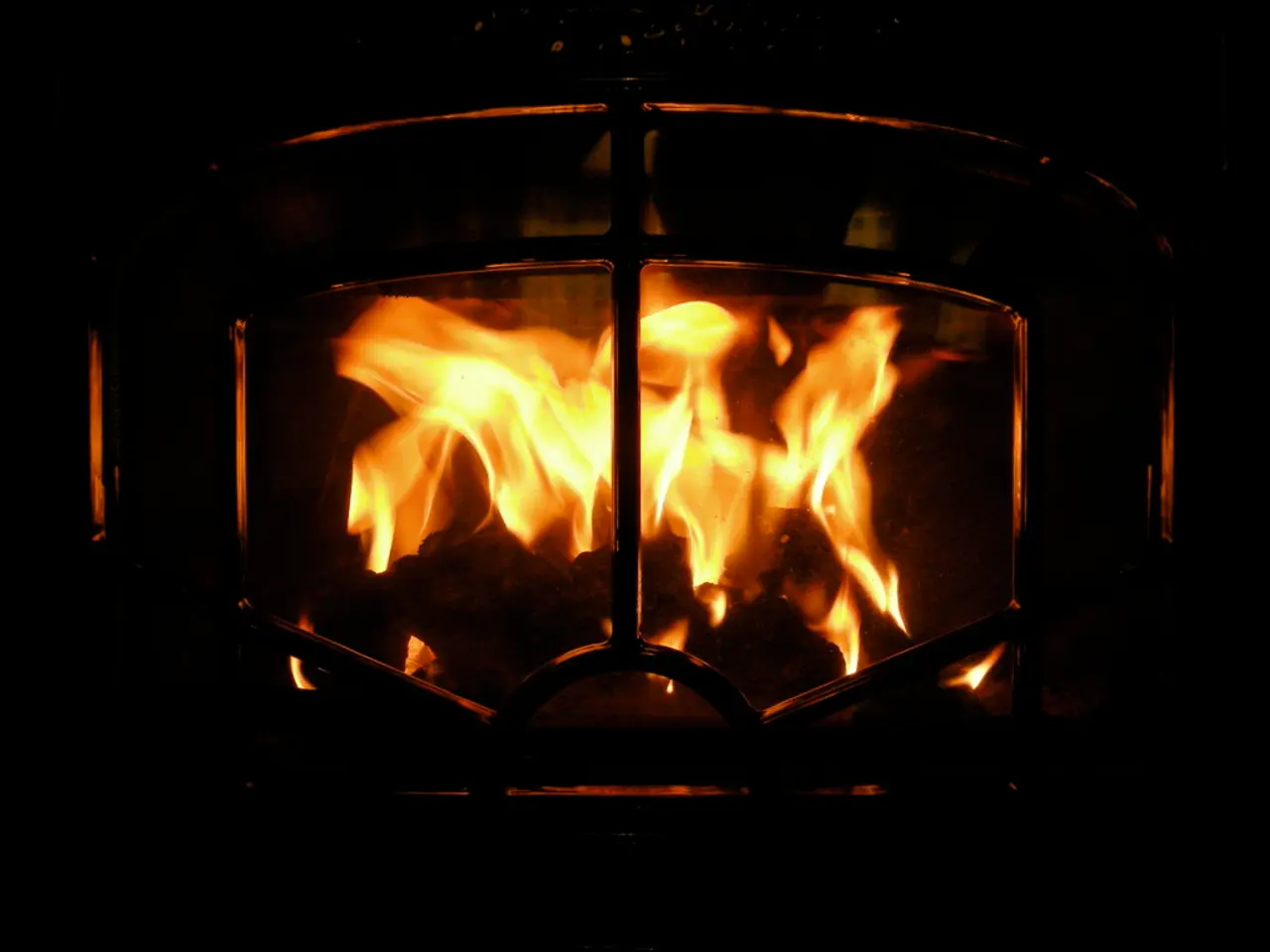
Issues and Remedies with Wood Burning Stoves - A Troubleshooting Manual
In the chillier months, having a log burner can be a cosy addition to any home. However, like any appliance, log burners can encounter issues that might affect their performance and safety. Here are some common problems and their solutions, as suggested by experts Calvin May and Stephen Talbot.
Glass Covered in Soot
If your log burner's glass window is covered in soot, it's likely due to incomplete combustion caused by burning wet or unseasoned wood or insufficient airflow. To maintain a clear view, use seasoned or kiln-dried wood and ensure good air supply through the stove’s vents. Regular cleaning of the glass with special stove glass cleaner is also advisable [1][2].
Smoking Wood Burner
Smoke entering the room from a wood burner is a cause for concern. Common causes include a blocked or poorly ventilated flue/chimney, burning wet or unseasoned wood, or a cold flue that causes poor draft. Solutions include regular chimney sweeping (at least yearly), using dry wood, fully opening the flue when lighting, and possibly consulting a professional to check flue design or blockage [1][2].
Wood Burner Going Out After Being Lit
A wood burner that goes out shortly after being lit can be frustrating. This can happen due to insufficient airflow, poor-quality wood, or an incorrect lighting technique. Ensure air vents are open enough to sustain combustion and use dry, properly seasoned wood. Lighting with a top-down method can help flames establish and persist better [3].
Wood Burner Not Giving Out Enough Heat
If your wood burner isn't providing enough heat, it could be due to burning wet or unseasoned wood, inadequate wood quantity, or the stove size being unsuitable. Use well-seasoned hardwood for longer, hotter burns, load sufficient fuel, and ensure the stove’s air controls are set correctly to allow optimal burning. Proper stove sizing for your space is crucial [1][3].
Wood Burner Giving Out Too Much Heat
Conversely, a wood burner that's giving out too much heat usually happens if the stove is overloaded or air controls are fully open, leading to an uncontrolled burn. Reduce the fuel load and adjust air supply to a moderate setting to maintain comfortable heat output and conserve fuel [1][3].
Wood Burner Smells of Burning
An unusual burning smell from a wood burner could indicate a problem with the stove or its installation. Creosote smells indicate the need for chimney cleaning. New stoves may emit an initial odor as paint or sealants cure but should dissipate. If persistent, check for faulty seals or flue connections and have a professional inspect for safety [1][2].
In summary, most issues relate to the quality of wood (always use dry, seasoned wood), chimney/flue maintenance (regular sweeping and ensuring good draft), and proper use of stove controls (airflow management and appropriate fuel loading) [1][2][3]. For persistent problems, consulting a qualified professional for inspection and repair is advisable.
Lastly, remember to set up appropriate sensors and alarms, such as carbon monoxide and smoke alarms, to identify any faults in the installation that might go unnoticed. Regular chimney sweeping (at least twice a year when burning wood or annually when burning smokeless fuels) is also important to prevent blockages.
[1] Calvin May, Expert Tips for Wood Burner Maintenance and Troubleshooting [2] Stephen Talbot, Common Wood Burner Problems and Solutions [3] Calvin May, Preventing 'Cold Plugs' in Wood Burners: Top Tips and Techniques
- To combat colder months, investing in a log burner can offer a warm and inviting atmosphere at home.
- Unfortunately, log burners may experience issues that can affect performance and safety, as detailed in Calvin May and Stephen Talbot's expert guides.
- One common issue is glass windows covered in soot, caused by burning wet or unseasoned wood or insufficient airflow.
- To maintain a clear view, experts advise using seasoned or kiln-dried wood and ensuring good air supply through the stove’s vents.
- Regular cleaning with specialized stove glass cleaner is also important [1][2].
- Smoke entering the room from a wood burner is a potential health hazard caused by a blocked or poorly ventilated flue/chimney, wet wood, or a cold flue.
- Solutions include regular chimney sweeping, using dry wood, fully opening the flue when lighting, and consulting professionals for design or blockage checks [1][2].
- A wood burner that goes out shortly after being lit can be a result of insufficient airflow, poor-quality wood, or an incorrect lighting technique.
- Experts suggest ensuring air vents are open enough to sustain combustion, using dry, properly seasoned wood, and employing a top-down lighting method to establish and maintain flames [3].
- If a wood burner isn't providing enough heat, it could be due to wet wood, inadequate fuel quantity, or an improper stove size.
- The use of well-seasoned hardwood for longer burns, loading sufficient fuel, and adjusting the stove’s air controls are essential for optimal heating [1][3].
- Conversely, burning too much wood or leaving air controls fully open can cause a wood burner to give out too much heat.
- Reducing the fuel load and adjusting air supply to a moderate setting can help maintain comfortable heat output and conserve fuel [1][3].
- An unusual burning smell from a wood burner could indicate issues with the stove or installation.
- Creosote smells may require chimney cleaning, while new stoves may emit an initial odor as paint or sealants cure [1][2].
- Total stove care involves regular chimney sweeping (minimum twice a year when burning wood or annually when burning smokeless fuels) and addressing any faulty seals or flue connections [1][2].
- Remember to set up carbon monoxide and smoke alarms to identify hidden installation faults.
- In the field of personal growth and self-development, frequent learning is crucial for continues improvement and success in one's career and lifestyle.
- Embracing education-and-self-development gadgets, such as e-readers and language learning apps, can help expand one's knowledge base and skills.
- The science of environmental science and medical-conditions is essential to understanding the impact of human activities on the environment and developing solutions to address health concerns.
- Staying informed about the latest research and breakthroughs in finance, space-and-astronomy, cybersecurity, and other fields can contribute to making more informed decisions in all aspects of life.
- Fashion-and-beauty may seem superficial, but investing time and resources in self-care can lead to increased confidence and overall well-being.
- Health-and-wellness, whether through exercise, nutrition, or holistic practices, can help manage medical-conditions and promote longevity.
- To maintain a balanced budget and secure financial future, personal-finance management is crucial for budgeting, saving, and investing—all of which can be facilitated by financial technology and wealth-management tools.
- Caring for the home and garden can promote an eco-friendly and comfortable living space, as demonstrated by proper wood burner maintenance and chimney sweeping practices.




