
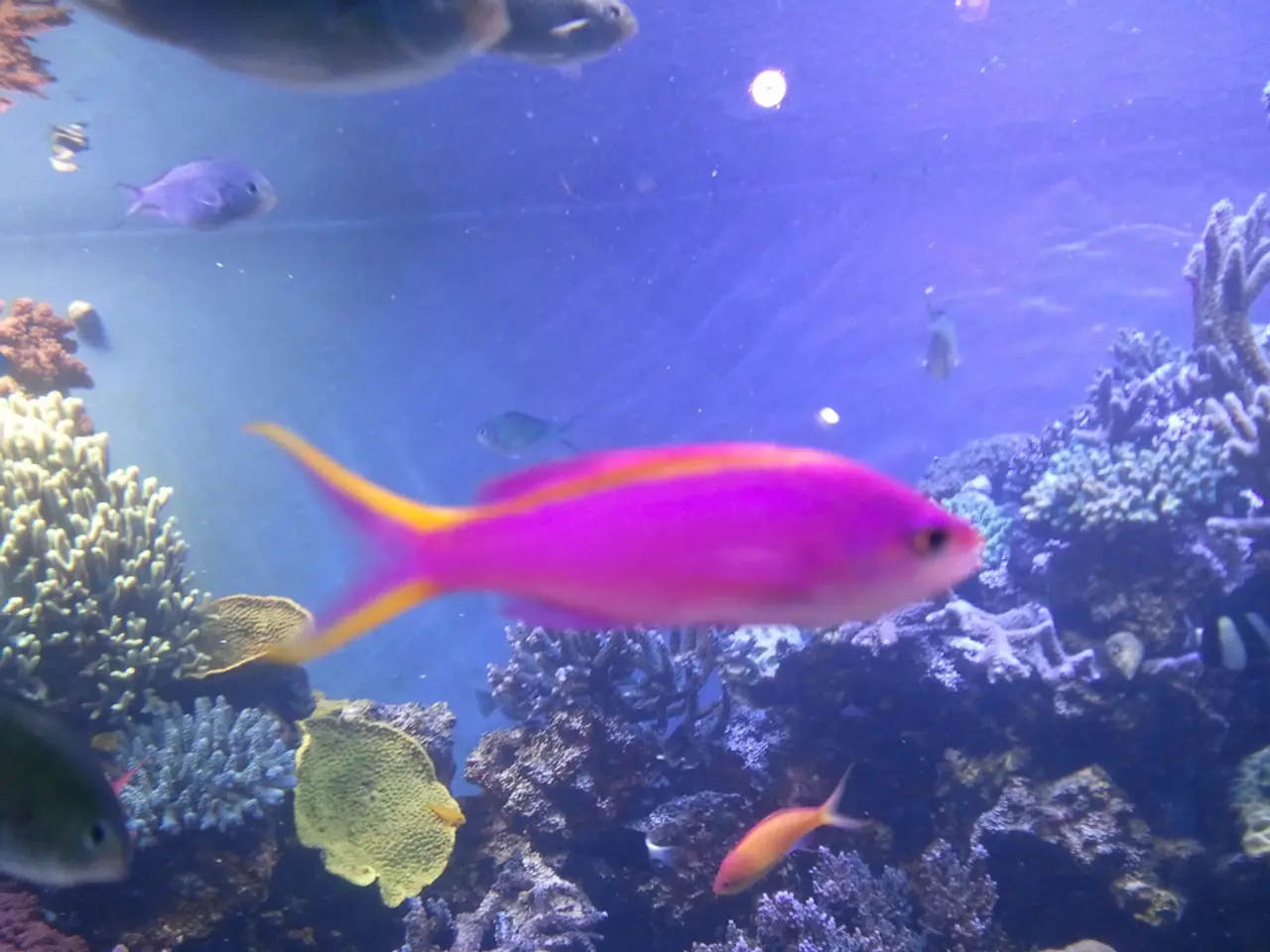
Marine life diversity in the Philippines is under threat of significant reduction
The Philippines, a country rich in marine biodiversity, is facing an unprecedented crisis. Overfishing, destructive fishing practices, growing plastic pollution, and climate change have taken a toll on its marine ecosystems.
Dynamite fishing and cyanide fishing, common practices among local fishermen, have wreaked havoc in the Philippine Sea for decades. These destructive methods, along with bottom trawling, have led to an unparalleled decimation of marine life. An analysis by the University of British Columbia found that these methods have been liberally used in the Philippines since the 1960s, with peaks in the 70s and 80s.
The Philippine government has responded with a new fisheries code, introducing stricter measures against these destructive practices. However, despite a ban issued in the late 90s, these methods continue to be commonly practiced until this day. The absence of serious enforcement measures has resulted in mixed results for the new fisheries code.
The Philippines' lax regulations on fishing activities have not gone unnoticed. In 2014, the European Union issued a yellow card to the country, warning of a potential ban on exports to the bloc due to unregulated fishing activities. Foreign fishing vessels from China, Vietnam, and Taiwan have been carrying out large-scale illegal fishing within the Philippines' exclusive economic zone (EEZ) since 2012.
The country's marine ecosystems are not just under threat from fishing practices. The Philippines ranks as the world's third-largest ocean polluter, generating 2.7 million metric tons of plastic waste annually and disposing of 20% of that directly into the ocean. This high concentration of plastic waste has caused disease outbreaks on coral reefs and irreversible harm to various marine species.
The central region of the Philippines, from Luzon to Mindanao, is home to a unique plethora of seagrass, invertebrates, seaweeds, and marine mammals. However, the Philippine Sea recorded an overall decline of 29% of fish stocks. A 2017 report by the United Nations predicted that all 29 World Heritage coral reefs, including one in the Philippines, will die out by 2100 unless carbon emissions are drastically reduced.
In an effort to combat this crisis, a strict enforcement mechanism and conservation methods based on a coordinated, national marine monitoring system are necessary. The Philippine government imposed a permanent curfew on Boracay in 2018 due to excessive waste in marine protected areas. A young whale shark found dead in Davao del Norte province in 2020, with a cup, wrappers, and numerous other plastic items in its stomach, attracted international attention to the issue of ocean pollution in the Philippines.
Despite the challenges, the Philippines remains a marine biodiversity hotspot. It has more marine species per unit area than any other place on the planet. With concerted efforts towards enforcement and conservation, the Philippines can once again become a beacon of thriving marine life in the Coral Triangle.
Read also:
- visionary women of WearCheck spearheading technological advancements and catalyzing transformations
- Recognition of Exceptional Patient Care: Top Staff Honored by Medical Center Board
- A continuous command instructing an entity to halts all actions, repeated numerous times.
- Oxidative Stress in Sperm Abnormalities: Impact of Reactive Oxygen Species (ROS) on Sperm Harm