Will the Conventional Agriculture Sustain Another Scorching Summer of Historically High Temperatures?
In the face of growing climate challenges and unprecedented weather events, the agriculture sector is looking towards innovative solutions to secure food supply and maintain quality. One such solution gaining traction is vertical farming, a modern approach to cultivating crops in vertically stacked layers.
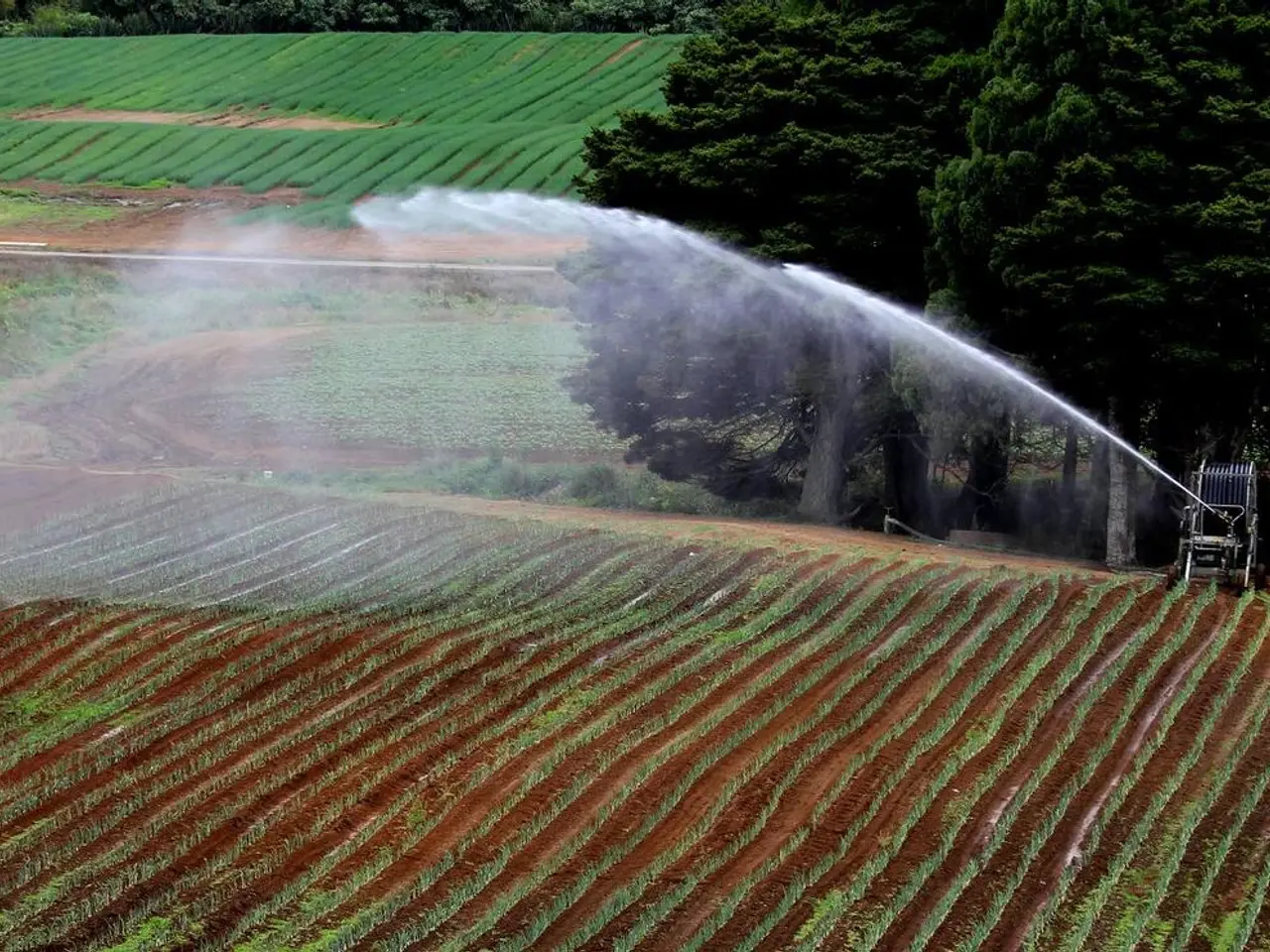
Currently, Europe is grappling with one of the worst droughts in over 500 years. Agriculture, accounting for 70% of all freshwater usage on the planet, is feeling the impact. However, vertical farming, with its clean-room technology, can help mitigate water usage. In fact, vertical farming's water usage is significantly lower than traditional agriculture, with around 95% of water being recycled.
Record-breaking heatwaves have caused damage to crops across the UK and Italy, further emphasising the need for more resilient farming methods. The shortage of grain, resulting from the war in Ukraine, has also highlighted the challenges of relying on imported food sources. This has led to concerns about food security, particularly with regards to wheat.
Advanced agricultural technology, such as vertical farming, is being developed to improve sustainability and reliability in the sector. Vertical farming systems, for instance, use minimal to no pesticides or fungicides, making them a more eco-friendly option.
The vertical farming industry is experiencing a boom as a resourceful way for agriculture to diversify. These farms can be deployed in both rural and urban settings, drastically reducing the time needed for food transportation. They can also serve as nurseries for crops that are later planted in the field or help cities lacking arable land achieve self-sustainability.
By employing a hybrid model that combines technology with traditional growing techniques, farms could potentially add an additional crop cycle throughout the year. This could lead to increased food output, a crucial factor considering the demands of the growing population and the need for innovation to minimise water usage.
The future of agriculture may not rely solely on traditional farming due to the increasing likelihood of extreme weather. Vertical farming, when used in conjunction with traditional farming, can provide relief from the impact of climate change.
Leading companies in the European vertical farming sector are focusing on innovations like LED lighting and automation to optimise growth in urban settings. Companies such as AMS-Osram AG, Signify Holding, Helioctectra, Everlight Electronics, Urban Crop Solutions, Aerofarms, and Freight Farms are popping up all over the EU, US, and Asia, aiming to stabilise and secure local food supply under climate change.
The Loire riverbed in France has run dry for the first time in recorded history, and over 45% of Europe and the UK is currently under drought warning conditions. These events underscore the necessity of adapting agriculture to climate change, with vertical farming and agri-tech becoming necessary players in ensuring food security and quality.
In conclusion, the future of agriculture lies in embracing innovative solutions like vertical farming. By doing so, we can ensure food security, reduce our environmental footprint, and adapt to the challenges of climate change.
Read also:
- visionary women of WearCheck spearheading technological advancements and catalyzing transformations
- Recognition of Exceptional Patient Care: Top Staff Honored by Medical Center Board
- A continuous command instructing an entity to halts all actions, repeated numerous times.
- Oxidative Stress in Sperm Abnormalities: Impact of Reactive Oxygen Species (ROS) on Sperm Harm